Regenerative Agriculture in Winter: Why Harmony Acres Chooses a Better Way to Farm

Winter has set in across the rolling landscape of Pennsylvania, and the fields at Harmony Acres Farm are in a season of quiet work. Frost covers the ground, growth slows above the surface, and the land rests. Yet beneath the soil, life continues. Microorganisms remain active, roots still interact with the soil, and the foundation for the next growing season is already being built.
This is where regenerative agriculture shows its true value.
At Harmony Acres Farm, regenerative farming is not a marketing term or a passing trend. It is a long-term commitment to caring for the land in a way that improves soil health, strengthens ecosystems, and produces food with integrity. Many customers who shop for grass-fed and organic products often wonder why regeneratively raised food often carries a higher price point. In this article, we’re going to dig deep to explain what regenerative agriculture truly is, how it differs from conventional farming, and why the long-term benefits accrue to both the farm and the families we serve through our harvest.
Jump To:
What Is Regenerative Agriculture?
Regenerative agriculture is a holistic approach to farming that focuses on restoring and strengthening the land rather than simply maintaining it. Instead of extracting nutrients from the soil and replacing them with synthetic inputs, regenerative farming works with natural systems to rebuild soil structure, increase biological activity, and improve resilience over time.

At Harmony Acres Farm, our understanding of regenerative agriculture is grounded in the work of the Soil Health Academy, an organization that conducts its research through real-world application on working farms and ranches across diverse climates and soil types.
Rather than relying solely on controlled laboratory studies, the Soil Health Academy works directly with producers to test regenerative principles in the field. These practices are evaluated through measurable outcomes such as soil organic matter, water infiltration, biological activity, plant health, livestock performance, and long-term economic viability. The results come from real farms facing real challenges, making the principles practical, adaptive, and proven through experience.
These field-tested principles form the foundation of how Harmony Acres Farm approaches regenerative farming.
The Six Core Principles That Guide Regenerative Farming at Harmony Acres
Regenerative farming begins with the understanding that no two farms are the same. The Soil Health Academy teaches a principles-based approach that adapts to each farm’s unique conditions rather than prescribing rigid formulas. At Harmony Acres Farm, these six principles guide every land management decision throughout the year, including the winter season.
Know Your Context
Every piece of land has its own combination of soil types, climate patterns, rainfall, topography, plant communities, livestock needs, and long-term goals. Knowing your context means observing how the land responds and tailoring practices accordingly.
At Harmony Acres Farm in Pennsylvania, this involves understanding how our soils behave during freeze-thaw cycles, how pastures recover after grazing, and how seasonal conditions affect plant growth. Decisions are made based on observation and response rather than assumptions.
Minimize Soil Disturbance
Soil functions as a living system made up of microorganisms, fungi, insects, and organic matter. Physical disturbance, such as heavy tillage, disrupts soil structure and biological networks. Chemical disruption compounds that damage.
Harmony Acres minimizes soil disturbance as much as possible. Harmful chemical applications are not an option (and this is respected by our neighboring farms as well). By protecting soil structure and soil life, nutrients cycle naturally, water infiltrates more effectively, and biological systems remain resilient even through winter stress.
Keep the Soil Covered
Exposed soil is vulnerable to erosion, moisture loss, and temperature extremes. Regenerative agriculture prioritizes keeping the soil covered at all times.
Cover crops, plant residue, and managed pasture systems provide protective soil armor. Even in winter, this cover insulates the soil surface, reduces erosion, and supports microbial life beneath the frost.
Maintain Continuous Living Roots
Living roots are essential to soil regeneration. Through photosynthesis, plants transfer energy below ground in the form of root exudates that feed soil microbes.
Regenerative farming focuses on maintaining living roots in the soil for as much of the year as possible. Cold-hardy plants, overlapping crop cycles, and perennial pastures ensure soil biology remains active, even during colder months.
Increase Diversity
Diversity strengthens ecosystems. A wide range of plant species supports a diverse soil food web, beneficial insects, and greater system resilience.
At Harmony Acres, diversity is built through pasture rotation, varied plant species, and encouragement of beneficial insect and wildlife populations. Increased diversity reduces pest pressure naturally and improves overall soil function.
Integrate Livestock
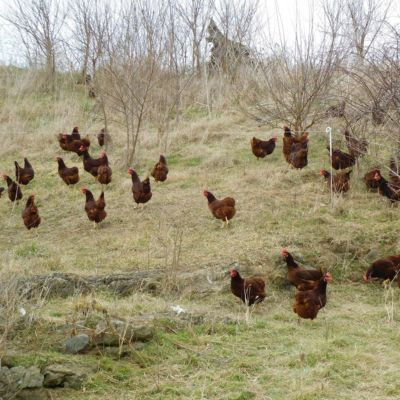
Livestock play a vital role in regenerative agriculture when managed intentionally. Properly timed grazing mimics natural herd movement, stimulating plant growth and cycling nutrients back into the soil.
At the Harmony Acres Farm, livestock are integrated as a tool for soil regeneration. Their movement fertilizes pastures, promotes deeper root systems, and helps build organic matter that supports long-term soil health.
How Regenerative Farming Differs From Conventional Farming
Conventional farming systems often prioritize short-term efficiency and yield. Regenerative farming prioritizes long-term soil function and ecosystem health.
Conventional practices also frequently rely on tillage, monoculture planting, and synthetic fertilizers. Over time, these approaches can degrade soil structure and reduce biological activity.
Regenerative farming takes a different approach. By protecting soil structure, increasing diversity, and reducing chemical reliance, regenerative systems build resilience. Healthy soil manages water more effectively, resists erosion, and remains productive across seasons.
In winter, this contrast is especially visible. Regenerative fields remain covered and biologically active beneath the surface, while conventional fields are often left exposed.
Why Regenerative Farming Costs More
Regenerative agriculture requires intentional investment. The higher cost of regeneratively raised food reflects decisions made in alignment with regenerative principles rather than shortcuts.
Higher Investment in Natural Systems

Regenerative farming replaces inexpensive synthetic fertilizers with natural soil-building practices such as compost, cover crops, and managed grazing. These systems require more planning, more labor, and more land.
Time Required to Rebuild Soil
Healthy soil does not regenerate overnight. Many regenerative farms experience a transition period of several years while biological systems rebuild. During this time, yields may be lower, and expenses may be higher.
More Time and Space for Animals
Animals raised regeneratively are given space to move, graze, and grow at a natural pace. This results in better animal welfare and higher-quality food, but it increases production costs.
Long-Term Resilience and Value
As soil health improves, regenerative farms often reduce dependence on purchased inputs and become more resilient to weather extremes. The long-term payoff includes healthier soil, more stable production, and stronger ecosystems.
The price of regenerative products reflects both the immediate cost of responsible farming and the long-term value of a healthier agricultural system.
Why Regenerative Agriculture Matters for Families
Choosing regeneratively raised food is not only a decision about supporting a farm. It is a decision that affects family health, environmental quality, and the long-term strength of our food system.
Healthy soil produces nutrient-dense plants, which support healthier animals and more nourishing food. Reduced chemical use helps protect water quality and surrounding ecosystems. Animals raised on pasture experience better welfare and lower stress, which directly impacts the quality of the food they produce.
Regenerative agriculture also strengthens food security. Farms built on resilient soil systems are better equipped to handle weather variability, supply chain disruptions, and long-term environmental challenges. For families, this means supporting food sources that are dependable, transparent, and rooted in land stewardship.
Strengthening Local and Decentralized Food Systems
We also believe regenerative agriculture plays a vital role in decentralizing the food system.
Much of modern food production relies on long, fragile supply chains that separate consumers from farmers and concentrate food production in fewer and fewer hands. Regenerative farming supports a different model. It emphasizes regional production, direct relationships, and accountability at the farm level.

By focusing on soil health, diversified production, and local partnerships, regenerative farms help build decentralized food systems where communities are less dependent on distant industrial operations. Food produced closer to home is easier to trace, more transparent, and more resilient during times of disruption.
For families, decentralization means knowing where food comes from, how it was raised, and who is responsible for it. It creates a direct connection between the health of the land and the health of the people it feeds.
When consumers choose regenerative products, they are not only investing in better farming practices. They are supporting a food system that values local stewardship, regional resilience, and long-term sustainability.
Why Harmony Acres Chooses Regenerative Farming
Harmony Acres Farm in Pennsylvania follows regenerative farming practices because we believe the land should be healthier each year, not more depleted. Our approach is grounded in observation, real-world results, and the principles taught by the Soil Health Academy.
Equally important, food should not be controlled by distant systems disconnected from the land. Regenerative farming allows us to remain accountable to our soil, our animals, and the families who rely on our products. By keeping production rooted in the land and guided by ecological principles, we contribute to a more decentralized, transparent, and resilient food system.
We farm this way because it produces food with integrity and ensures the land remains productive for future generations.
Where to Find Regeneratively Raised Products
Customers in Virginia and the surrounding region can find regeneratively raised meats and farm goods at Harmony Acres Farm Store, located in Aroda, VA. The Farm Store partners directly with Harmony Acres Farm in Pennsylvania, as well as other producers who share a commitment to regenerative agriculture, decentralized food systems, and long-term soil health.
Shopping at the Farm Store supports farms that invest in local stewardship, transparent practices, and resilient regional food production. Winter may appear quiet on the surface, but on a regenerative farm, it is a season of restoration and preparation.
At Harmony Acres, that work continues beneath the soil, season after season.
Comments